✅ What We Like
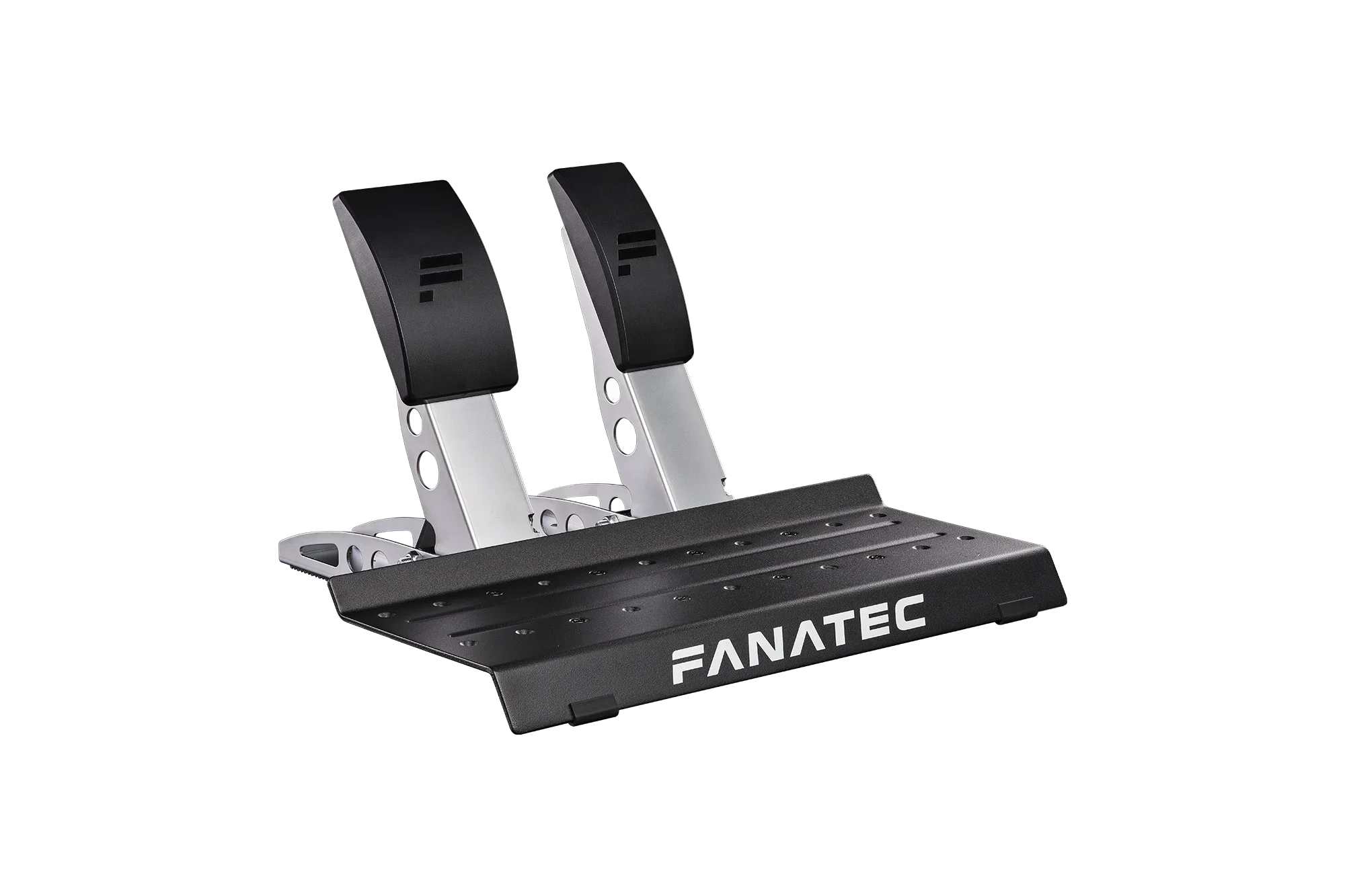
- All-metal construction with solid footplates that feel sturdy underfoot.
- Excellent cable management channels built directly into the underside.
- Seamless plug-and-play connectivity with Fanatec wheelbases.
- The optional Load Cell Kit transforms the brake into a pressure-based unit.
❎ Needs Improvement
- The stock accelerator pedal offers almost zero resistance and feels far too light.
- The standard foam brake pedal is underwhelming for anyone attempting proper trail braking.
- Stacking aftermarket upgrades quickly pushes the total cost toward far superior pedal sets.
Introduction: The Standard Entry Option
When you dive into the Fanatec ecosystem, the standard CSL Pedals are usually the first stopping point on the menu. At roughly £86 for the basic two-pedal set or £156 with the Load Cell Kit included, the price tag looks genuinely tempting on paper. They regularly come bundled in Fanatec Ready to Race packages, making them the default starting line for thousands of sim racers taking their first steps away from desk-mounted starter gear.
Coming from something like a Logitech G920, my initial out-of-the-box impression was that these are noticeably more substantial. They are functional, affordable, and get you up and running without fuss. However, once the initial excitement wears off, you quickly discover where Fanatec shaved costs to hit that entry level price point.
Check out current pricing for pedal upgrade accessories here from Race Sim Engineering.

Build Quality & Hardware Features
rom a pure materials standpoint, Fanatec deserves credit for building a durable frame. Rather than opting for hollow plastic casings, the CSL set features stamped steel arms and sturdy metal footplates. The heel rest holds firmly under pressure, and the clever cable routing channels underneath keep your rig looking tidy.
Connecting everything is as straightforward as it gets. If you are running a Fanatec wheelbase, the pedals plug directly into the back using an RJ12 cable, saving you from consuming another USB port on your PC.
The base two-pedal setup relies on contactless Hall-effect sensors on both the throttle and brake. While Hall sensors are great for long-term reliability because they do not suffer from potentiometer dust wear, the actual mechanical sensation of pushing the pedal leaves a lot to be desired. The stock brake relies on a simple foam damper that compresses quickly, making precise trail braking difficult to repeat consistently.
Upgrading to the CSL Load Cell Kit replaces that stock brake pedal with a heavy-duty pressure sensor and moves your original brake over to serve as a clutch. It is a massive structural step up, but it also highlights the next glaring weak link in the assembly.
If you are looking for mounting hardware and rig adapters, you can browse options here: Sim Racing Pedal Mounts on Amazon.
On-Track Performance & Driving Feel
On track, the difference between the base brake and the Load Cell Kit is night and day. Switching from distance-based braking to pressure-based muscle memory allows you to hit your deceleration targets with far more consistency in heavy braking zones.
Out of the box, the standard load cell elastomers can feel extremely stiff. To get a smoother progression, I ran aftermarket elastomer mods sourced from eBay and Amazon. That custom elastomeric stack gave me a usable, progressive brake feel that served me well for about two years of regular racing.

The real issue with this pedal set, however, is the throttle. The stock accelerator spring is exceptionally light. There is so little resistance underfoot that feathering the gas out of slow corners in high-horsepower cars feels like trying to balance on a feather.
After trying several spring swaps that failed to deliver the right tension, I fitted the Race Sim Engineering Throttle Upgrade Kit Rev3. At roughly £48, it finally transformed the accelerator into a weighted, precise input. But that brings us to the core dilemma. Once you spend £86 on the base set, £70 on the load cell, and £48 on throttle fixes, you have spent well over £200 on a heavily modified entry-level set. At that price point, you are encroaching on dedicated mid-range units like Fanatec’s own CSL Elite V2 or even ClubSport V3s, which offer superior build quality, built-in adjustment, and far better pedal geometry right out of the box.
THE MODDING TRAP
Fixing the light throttle requires third-party help. Mods like the Race Sim Engineering Throttle Upgrade Kit Rev3 (around £48) add much needed resistance, but combining the base pedals (£86), load cell (£70), and throttle mod pushes your total investment over £200. Other options are available even the much preferred Fanatec CSL Elite Pedals V2.
Final Verdict & Recommendation
The Fanatec CSL Pedals are a decent starting point if you grab them inside a discounted Ready to Race bundle. They are tough, functional, and offer clean plug-and-play integration with the Fanatec ecosystem.
However, if you are buying them standalone with the intention of upgrading every component piece by piece, the value proposition vanishes quickly. Between the ultra-light throttle and the basic stock brake, you will likely find yourself hunting for aftermarket mods sooner rather than later. If your budget allows, saving up a little extra for a higher-tier pedal set will save you time, money, and frustration in the long run.
P1R Verdict Card
The Bottom Line:
Best suited for complete beginners acquiring their first Fanatec bundle on a strict budget, but experienced racers should skip the upgrade rabbit hole and invest directly in a higher-tier pedal set.
P1R Rating: 2.5/ 5
Looking to improve your lap times?
Get the AB Racing Line Engineer to find out where you’re losing time and get faster now.